Prepare · Prevent · Protect
~ IGTECH® hypochlorous acid (HOCl) technology, supports wound cleansing, rinsing and moistening as part of this coordinated approach.
Effective wound care involves several steps working together: cleansing the wound, removing nonviable tissue when necessary, and selecting appropriate dressings. Each step serves a different purpose within a treatment plan tailored to the patient.
At Ionic Global, we believe that understanding these roles helps healthcare professionals and caregivers make informed decisions. Antaviro™ Wound Care, powered by IGTECH® hypochlorous acid (HOCl) technology, supports wound cleansing, rinsing and moistening as part of this coordinated approach.
Cleansing and preparing the wound
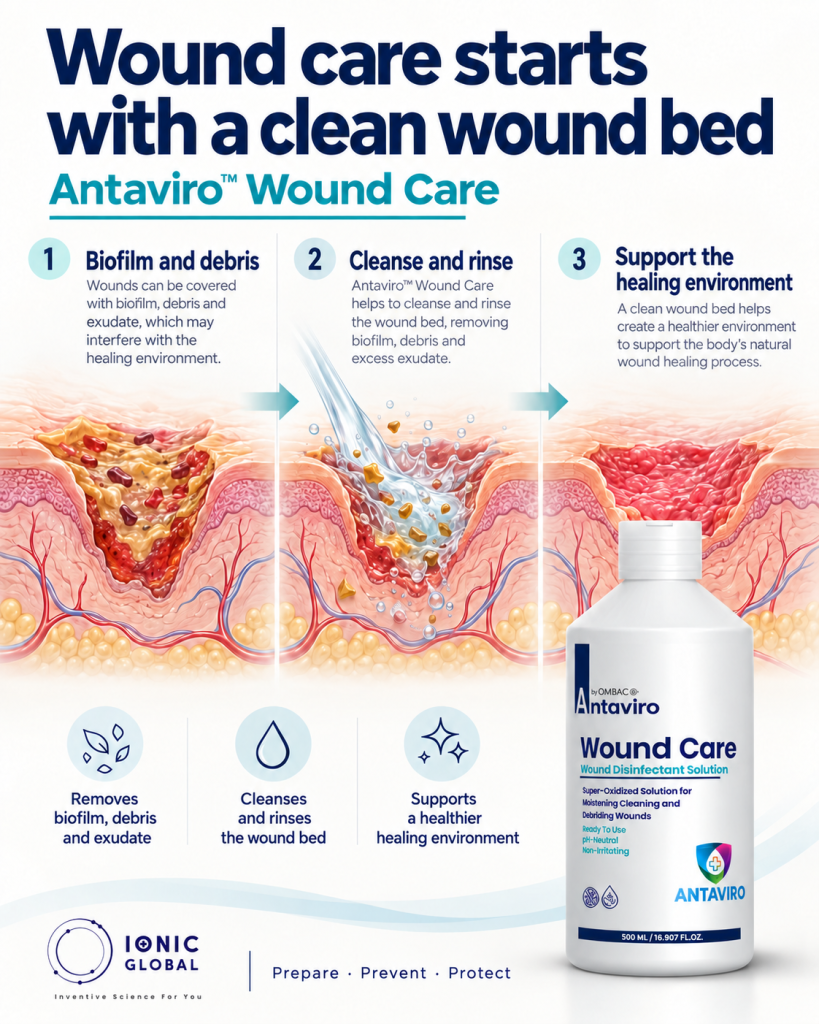
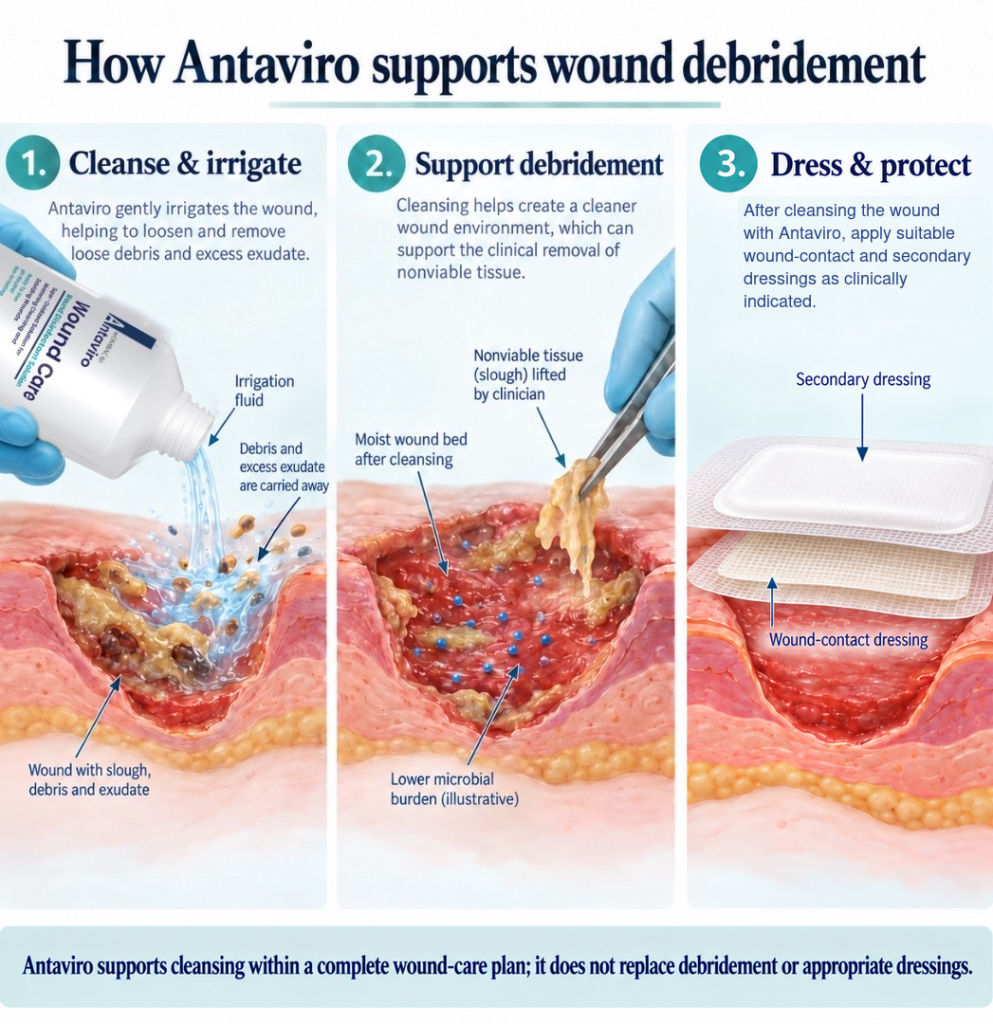
Wound cleansing helps remove loose debris, dressing residue and excess wound fluid, known as exudate. Irrigation carries away material from the wound surface, supporting assessment and preparation for subsequent care.
Antaviro’s role is to support this cleansing stage. Preparing the wound allows the treating healthcare professional to assess its condition and determine whether debridement or other interventions are needed.
Supporting debridement
Debridement involves removing nonviable tissue and material that can interfere with wound management. The appropriate method depends on the wound and requires clinical assessment.
Cleansing supports this process by helping clear loose material from the wound surface. However, cleansing with HOCl does not replace the clinical removal of adherent slough or necrotic tissue when indicated. Antaviro should therefore be understood as part of wound-bed preparation within a broader care plan.
Can dressings still be used after Antaviro?
Yes. After cleansing with Antaviro, suitable wound-contact and secondary dressings may be applied as clinically indicated.
A wound-contact, or primary, dressing sits directly against the wound. Depending on its design, it may help manage moisture, absorb exudate or protect delicate tissue.
A secondary dressing is placed over the primary dressing when needed. It can provide additional absorption, protection or securement. Some dressings combine these functions in a single product, so two separate layers are not always necessary.
Antaviro cleansing and appropriate dressing care have complementary roles: cleansing prepares the wound, while the selected dressing helps maintain the conditions required for ongoing care. Using Antaviro does not mean that the solution alone is sufficient for every wound.
The choice of dressings and any additional topical treatment should follow clinical assessment and the relevant manufacturers’ instructions. Compatibility should be checked for the specific products being used.
A coordinated approach to wound care
Wound healing also depends on factors such as circulation, pressure relief, nutrition, infection management and underlying health conditions. Regular reassessment helps ensure that treatment remains appropriate as the wound changes.
Through Antaviro™ Wound Care, Ionic Global supports a practical message: cleanse and prepare the wound, address debridement when needed, and follow with suitable dressing care.
Prepare · Prevent · Protect
For product enquiries, contact Ionic Global at +6012-454 4019.